
- Aug 27, 2025
- 4 min read
Updated: 21 hours ago
THE REFASHION JOURNAL
OBSERVATION 001
AT WHAT POINT DID THE STUFF WE WERE WEARING 5 MINUTES AGO BECOME VINTAGE?
Who decided this was vintage?

There is something mildly offensive about seeing something you remember buying new described as vintage.
A pair of Saint Laurent earrings from 2018 turns up online as “vintage YSL.” Alessandro Michele-era Gucci is becoming “archive Gucci.” Phoebe Philo-era Céline is collectible. Pieces you could swear you saw sitting in a department store approximately fifteen minutes ago are being photographed, catalogued and sold as artifacts from another fashion era.
Excuse me?
2018 was eight years ago. Technically a fact. Emotionally, fraudulent.
And 2018 wasn't exactly an insignificant year in fashion. It was Phoebe Philo's final year at Céline. Anthony Vaccarello was turning Saint Laurent into his particular version of Parisian sex and excess. Alessandro Michele's maximalist Gucci universe was everywhere. Vetements was busy making the supposedly unfashionable fashionable.
Look back at the photographs now and something is immediately obvious.
Remarkably little of it looks old. 2018, APPARENTLY..
In May 2018, Vogue was writing about the enormous jeweled disc earrings from Phoebe Philo's final Pre-Fall Céline collection. Colorful, weighty and slightly strange, they were proposed as the new statement earring for summer.
Look at them now. They look completely current.
Not current in the polite you could still get away with these sense. Current current. The scale, sculptural metal and deliberate weirdness could walk straight into a 2026 editorial.
Yet we've already started calling this period archive Céline.
In 2018, Vogue was telling us to buy it. Eight years later, we're collecting it.
Fashion didn't become old.
We renamed it.
At Saint Laurent, Anthony Vaccarello was doing something different but equally enormous. His Spring 2018 collection was feathers, microscopic silhouettes, glitter and huge shoulder-grazing earrings, followed by more rhinestones, gold and '80s excess for Fall.
And then there was Gucci.
Alessandro Michele's 2018 Gucci was essentially everything everywhere all at once before we had a phrase for it. Pearls, crystals, logos, talismans, giant jewelry, vintage references, '70s glitz, grandmother chic and whatever else happened to wander into Michele's brain that morning.
By Fall, Gucci was staging a show in an operating theater with models carrying replicas of their own heads. Crystal headpieces covered faces. Jewelry was layered over more jewelry. There was even a baby dragon.
And Vetements? Demna Gvasalia took editors to the Paul Bert Serpette flea market for Fall 2018 and openly played with deconstruction, repurposing and the relationship between old clothes and new fashion.
Even in 2018, fashion was digging through its own history to decide what came next.
Now we're digging through 2018.
There is something beautifully ridiculous about that.
THEN THE PANDEMIC ATE TIME
Part of the problem is that several years went missing.
There was 2019. Then 2020 happened, sort of. Then 2021 happened largely indoors. By the time everyone properly reemerged, blinking into daylight and attempting to remember how trousers worked, several years had simultaneously disappeared and lasted approximately seventeen years.
Clothes sat unworn in closets. Trends were born, copied and declared dead on screens without some of us ever encountering them on an actual human being.
Then everyone came back outside and fashion seemed determined to make up for lost time.
The 2000s returned. Indie sleaze returned. Ballet flats returned. Low-rise jeans returned despite considerable public opposition. Boho returned. Minimalism returned. Maximalism apparently never left.
And somewhere in there, things we had barely finished wearing started appearing online with one magical word attached:VINTAGE.
SO EVERYTHING IS IN FASHION! The internet didn't just accelerate fashion. It broke the old fashion calendar.
A teenager lying in bed at 1:13 in the morning can encounter Phoebe Philo's 2018 Céline, Tom Ford's 1996 Gucci, John Galliano's 2004 Dior and something that walked a runway three days ago in the same fifteen-minute scroll.
Fashion history isn't being consumed chronologically anymore.
It's all just... fashion.
Which explains the increasingly bizarre situation we're living in now: everything is in fashion at the same time.
Tiny bags and enormous bags. Skinny jeans and gigantic jeans. Minimalism and maximalism. Quiet luxury and shameless logo mania. Gold and silver. Chanel pearls, punk hardware, ladylike brooches and gigantic '80s earrings.
1994, 2004, 2014 and 2026 are sharing a dressing room.
Fashion isn't moving neatly forward anymore.
It's eating itself. And actually, that's kind of great.
Because the cynical little secret behind fashion is that almost everything eventually comes back. We buy something. We love it. We get sick of it. We decide it's embarrassing. We put it in a drawer or sell it for a fraction of what we paid.
Five years later, someone with excellent lighting photographs essentially the same thing and suddenly we want it again.
The object hasn't changed. The context has.
That chunky gold earring sitting untouched since 2016 suddenly looks fantastic. The brooch your mother hasn't worn since 1998 appears on a runway. The necklace you nearly donated becomes the exact necklace everyone is searching for.
The cycle has become so compressed that sometimes an object barely has enough time to become unfashionable before it becomes fashionable again.
SO, WHO DECIDED THIS WAS VINTAGE?
Maybe we're asking the wrong question.
If every decade is available simultaneously, being stylish becomes less about owning whatever was released this month and more about knowing what to pull out of the pile.
That's where vintage gets interesting.
Not because something is old. Not because somebody typed RARE VINTAGE!!! into a listing. And certainly not because we're prepared to accept that 2018 is ancient history.
It's interesting because an object can belong completely to another fashion moment and then, without changing at all, suddenly look perfect again.
You see it and think: Oh. This looks better now. Maybe that's what vintage means in 2026.
Not old. Ready again.

CÉLINE PRE-FALL 2018. Phoebe Philo's final collection. 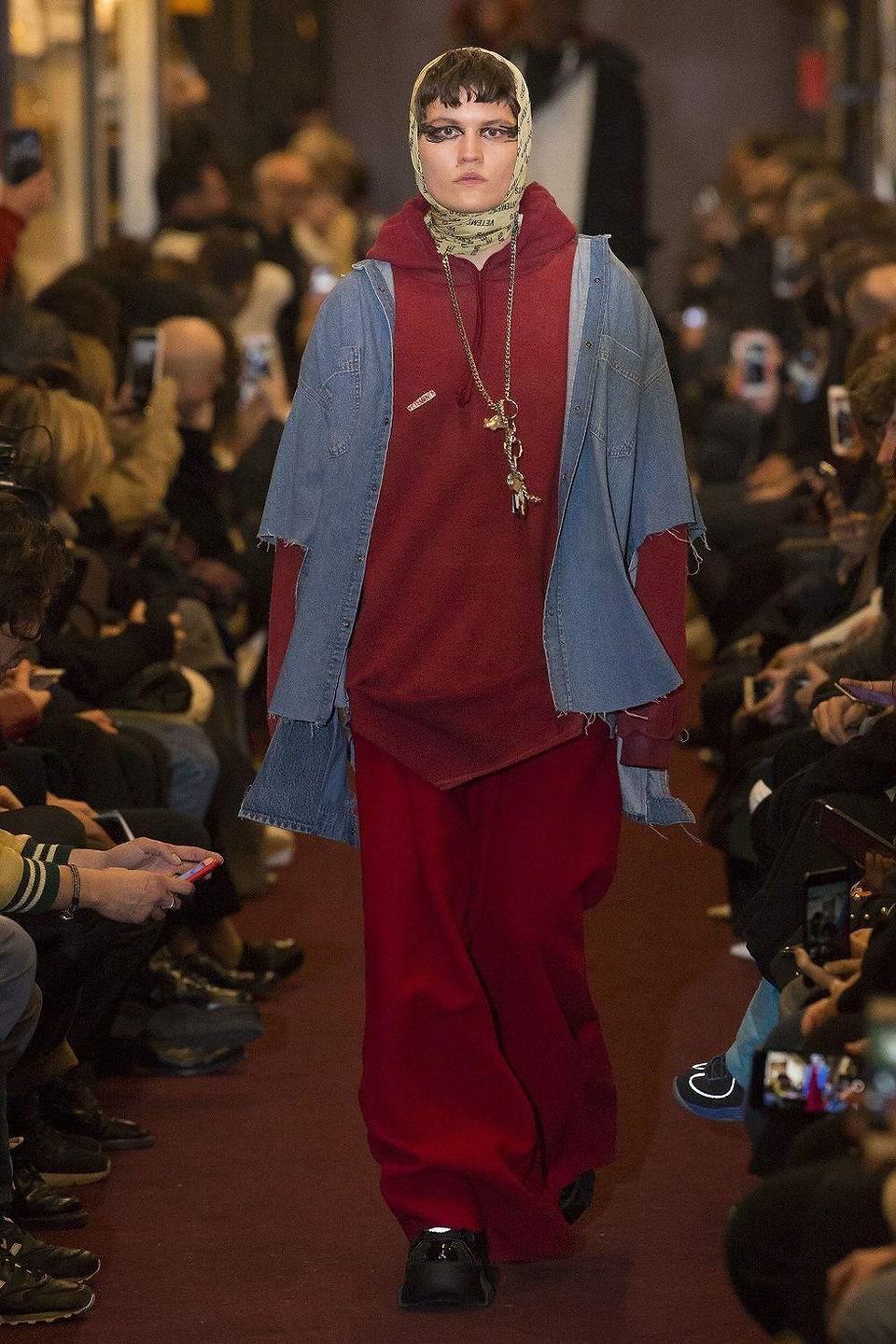
VETEMENTS FALL/WINTER 2018. Fashion eating its own history. 
GUCCI FALL 2018. Alessandro Michele at full volume. 
SAINT LAURENT FALL 2018. Crystal, drama, attitude.
Photo: Jay Openiano / Unsplash

Comments